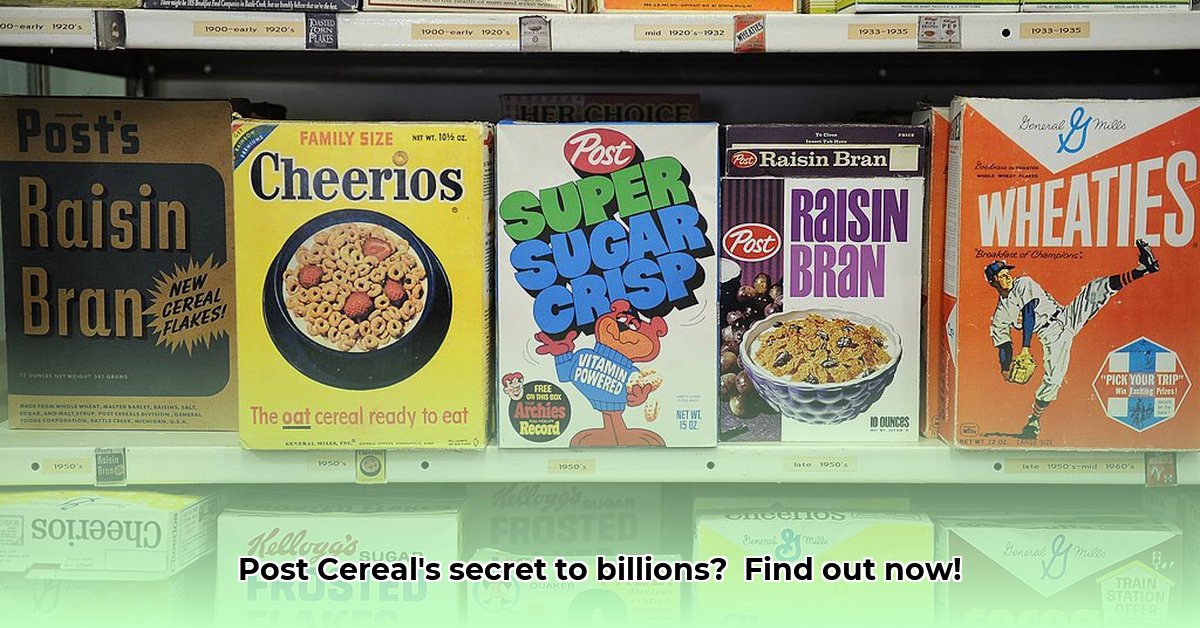
Post Cereal Net Worth: Untangling the Threads of a Breakfast Giant
So, you're gatvol (fed up) of hearing about Post cereal without knowing its actual worth, nê? It's trickier than finding a koeksister (a traditional South African donut) in a jol (party). Post Holdings, the parent company, reports overall financials, but isolating Post Consumer Brands' cereal contribution is like trying to separate the mielies (corn) from the samp (ground corn). This is because Post Holdings is a diversified food company, not just a cereal producer.
From Humble Beginnings to Breakfast Battles: Post's Lekker (Nice) Journey
Post Consumer Brands didn't spring up overnight, tjommie (mate). Their rise is a story of shrewd acquisitions, strategic moves, and a bit of luck. Buying MOM Brands and Weetabix were masterstrokes, catapulting them to the number three spot in the US cereal market. However, their diversification also involves brands like Peter Pan peanut butter and various pet food brands, demonstrating a well-balanced strategy. But how much did these acquisitions actually contribute to Post cereal's overall value? That’s the million-rand question.
How much did these acquisitions contribute to Post’s value? It’s difficult to say definitively due to the lack of detailed financials separating the cereal division's performance from the rest of the company's activities.
The Cereal Wars: A Kragtige (Powerful) Competition
The cereal aisle is a battlefield. It's a cutthroat business, with Kellogg's and General Mills always vying for shelf space (and your rands). Sales growth is slowing down and this leaves the big players needing to innovate consistently, to stay in the game. Post faces these same pressures, requiring adaptation and innovation. How do they stay competitive? They adapt to market shifts, innovate new offerings, and keep their loyal customers happy. But how does this impact Post cereal's overall value? They need to strike a balance between growth and profitability in a highly competitive landscape.
Did you know that the cereal market is highly competitive? Yes, that’s right, with established brands such as Kellogg's and General Mills continuously battling for market share.
Changing Tastes: Keeping Up with the Times
Breakfast preferences are constantly changing. Younger generations often view cereal as a snack, not just a breakfast food. This means that Post needs smart marketing strategies to reach them effectively. Success depends on understanding these shifting consumer behaviours, adjusting products, and creating relevant marketing campaigns. Can they do it? Their success with Raisin Bran Crunch showcases their ability to adapt, particularly by focusing on healthier options that appeal to health-conscious consumers. That’s critical in today's market.
What marketing strategies does Post employ to stay competitive? Their approach is multi-pronged, encompassing digital marketing, social media engagement and traditional media advertising.
The Numbers Game: Why a Precise Figure is Moeilik (Difficult)
Getting an exact figure for Post cereal's net worth is like trying to catch the wind. Public reports from Post Holdings show their overall financial state but don't provide a detailed breakdown of each brand's performance. A precise valuation necessitates significantly more detailed data. This lack of granular transparency makes pinpointing a definitive number elusive.
Have you ever tried to get a precise figure for something? It's challenging and particularly so in this case due to the lack of detailed financial information from Post Holdings.
What's Next for Post Cereal? A Glimpse into the Future
What does the future hold for Post? Further acquisitions in related markets are likely. Increased investment in research and development (R&D) – particularly focusing on improved nutrition and sustainability – could enhance their brand image and value. Global expansion is another possibility. However, succeeding in this fiercely competitive market requires a comprehensive approach.
What are some of the growth strategies that Post Holdings might pursue in the future? They might acquire other complementary brands, move into new markets and potentially even develop new products.
The Big Picture: A Story of Adaptation and Innovation
Determining Post cereal's precise net worth without more detailed financial information is impossible. But examining their history, market position, and future plans gives a clearer picture of their value and trajectory. Post Consumer Brands' story is about adapting to change, innovating strategically, and making strategic acquisitions – a successful recipe in a challenging market. Both exciting opportunities and significant challenges lie ahead. Their capacity to continuously adapt will be key to future success and valuation.
What are the key factors influencing Post’s future success? The key factors include innovation, brand building, strategic market positioning among others.
How to Supercharge Profits for Acquired Cereal Brands: Lessons from Post Holdings
Key Takeaways:
- Post Holdings’ success is closely tied to acquisitions, especially in pet food.
- While acquisitions boosted profits, organic growth in some cereal segments lagged.
- Smart pricing strategies helped offset rising input costs.
- Volume challenges highlight the need for ongoing innovation and marketing.
- Improving acquired cereal brand profitability demands a multi-faceted approach.
Post Holdings' recent financial performance shows the power of strategic acquisitions, but also highlights the need for ongoing management and innovation. Let's examine how they navigated this complex landscape.
The Acquisition Advantage: A Dubbelsydige (Double-sided) Sword
Post Holdings' impressive fiscal year 2024 results demonstrated the power of strategic acquisitions. Pet food particularly outperformed expectations, significantly boosting the bottom line. This success highlights the potential of acquiring established brands, however, success is not automatically guaranteed.
Unlocking Success: How to Improve Acquired Cereal Brand Profitability
Successfully integrating acquired brands requires a multi-pronged approach. It's not just adding products; it’s about understanding the nuances of brands, markets, and consumers. Here's a step-by-step plan:
- Meticulous Due Diligence: Before acquisition, scrutinize the target's financials, market position and consumer base.
- Strategic Integration: Seamlessly merge operations, supply chains and marketing.
- Innovative Product Development: Introduce new flavors, formats, or products to attract new customers.
- Targeted Marketing: Develop marketing strategies relevant to specific brands and target groups.
- Streamlined Supply Chain: Optimize for cost-effectiveness and timely delivery.
- Savvy Pricing: Find the right balance for profitability while maintaining competitiveness.
Navigating the Challenges: A Realistic View
Post Holdings has faced challenges, particularly volume decline in some segments. This highlights that simply acquiring brands doesn't guarantee success; actively managing and improving them post-acquisition is critical.